
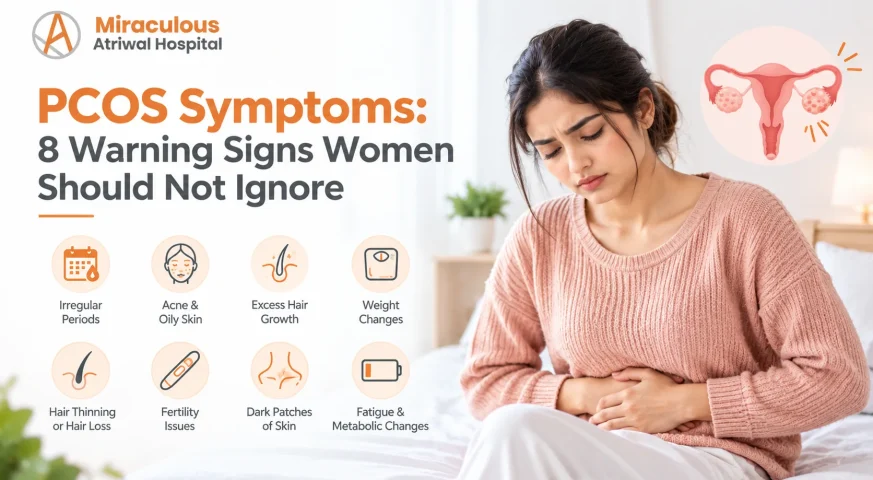
PCOS Symptoms: 8 Warning Signs Women Should Not Ignore
Introduction Women of reproductive age are affected by the hormonal and metabolic condition known as polycystic ovarian syndrome (PCOS). It happens when the ovaries overproduce androgens, or male hormones, which causes irregular ovulation, irregular menstruation, and numerous tiny ovarian cysts. Because of this, a lot of women with PCOS have irregular periods or have trouble getting pregnant. Insulin resistance, which can worsen symptoms and result in long-term issues including diabetes and cardiovascular disease, is also associated with PCOS. PCOS symptoms include infrequent and irregular periods, excessive face and body hair growth, acne, and reproductive issues. Some people with PCOS also notice hair thinning. Recognizing the potential symptoms of PCOS early might assist women in seeking appropriate medical assistance and understanding their treatment choices. If you have persistent monthly abnormalities, unexplained skin changes, or other strange symptoms, see a gynecologist. They can help you discover the cause and lead you through the right treatment. What Is PCOS? A hormonal imbalance in the body causes polycystic ovarian syndrome. The ovaries produce estrogen and progesterone, and when these two hormones are out of balance, an ovulation issue develops. A reduction in female sex hormones defines PCOS. The existence of cysts in the ovaries is supposed to cause an imbalance of these hormones, which interferes with the proper functioning of the ovaries. A woman with polycystic ovaries does not ovulate or ovulates less frequently than usual. Ovulation is a fertility cycle that causes a menstrual cycle when pregnancy does not occur. A woman who develops ovarian cysts may also produce an excess of androgen, the male hormone. In general, the female body generates tiny levels of androgen; however, when the hormone balance is disrupted, the amount of androgen produced increases. Hormones trigger the release of additional hormones. A woman with PCOS has excessive hormone production in her body, disrupting the natural equilibrium. It disrupts ovulation and the reproductive cycle, making it harder for her to conceive. How Does PCOS Affect Hormones and Menstrual Cycles? One of the first and most visible symptoms of PCOS is irregular or skipped periods. Normally, ovulation results in the release of one egg every month. In PCOS, hormonal imbalance disrupts this process, resulting in delayed or missing ovulation. Without ovulation, the menstrual cycle is unpredictable. Common menstruation symptoms in PCOS are: Irregular or missed menstruation Heavy or protracted bleeding. Difficulty monitoring ovulation Spotting between cycles When ovulation does not occur on a regular basis, the uterus fails to remove its lining effectively. Over time, this can raise the chance of endometrial thickening, which is why women with PCOS must check their menstrual health. What Is the Difference Between PCOS and Ovarian Cysts? Polycystic ovarian syndrome [PCOS] and ovarian cysts are two different illnesses that are sometimes mistaken due to similar symptoms. While PCOS cysts are a form of ovarian cyst that causes hormonal imbalances, not all ovarian cysts are associated with PCOS. Understanding the distinctions between PCOS and ovarian cysts is critical to accurate diagnosis and therapy. This blog delves into the distinct features, symptoms, and treatment options for these illnesses. While ovarian cysts and PCOS might present with identical symptoms in some situations, they are two distinct illnesses. Women with many ovarian cysts may not necessarily have PCOS; however, multiple ovarian cysts are a sign of PCOS. 8 Common PCOS Symptoms Women Should Not Ignore Polycystic Ovary Syndrome (PCOS) can produce a variety of physical and hormonal changes that might disrupt a woman’s daily routine. While some signs are obvious, others may appear gradually. Recognizing these changes can help women seek medical care and determine whether more testing is required. Here are eight typical PCOS symptoms that women should be aware of. 1. Irregular or Missed Periods PCOS is characterized by a sex hormone imbalance, which results in irregular periods. Your menstrual cycle contains precise increases and dips in the female sex hormones; if they are out of balance, you may have difficulty ovulating. In most circumstances, a menstruation comes after successful ovulation. In PCOS, you are more likely to have a lengthier cycle, with your period occurring less frequently than 28 days. Small cysts that frequently occur on the ovaries can be harmful and prevent ovulation. 2. Persistent Acne and Oily Skin Acne, or oily skin. PCOS-related hormonal abnormalities can cause oily skin and acne. Women with PCOS may get acne on their chin, jawline, cheeks, or lower face. Breakouts can last until adulthood or recur despite frequent skincare. However, acne alone does not indicate PCOS because it might be caused by a variety of other reasons. 3. Excess Facial or Body Hair Growth Excess facial or body hair, often known as hirsutism, is another possible PCOS symptom. It can happen when androgen levels rise, or the hair follicles become more susceptible to these hormones. on the face and other parts of the body that are not normal for a woman but are more male. It is caused by high levels of androgen (male hormone) in the body. Male hormones cause facial hair to grow, as well as excessive hair on the chest and limbs. 4. Unexplained Weight Gain or Difficulty Losing Weight Around fifty percent of women with PCOS struggle to gain or lose weight. PCOS can cause excessive weight gain. Being overweight can exacerbate PCOS symptoms. Losing even a few pounds may improve the time of your periods. Losing weight can be an effective strategy to control your cholesterol and blood sugar levels, all of which are critical if you have PCOS. 5. Thinning Hair or Hair Loss Hair growth in unwanted locations. Your doctor may refer to this as “hirsutism”. You may have unwanted hair sprouting on your face or chin, breasts, stomach, or fingers and toes. Women with PCOS may notice thinning hair on their heads, which might worsen in middle age. 6. Difficulty Getting Pregnant PCOS can make it difficult for some women to conceive because hormonal abnormalities may affect regular ovulation. When eggs are not
Read More