
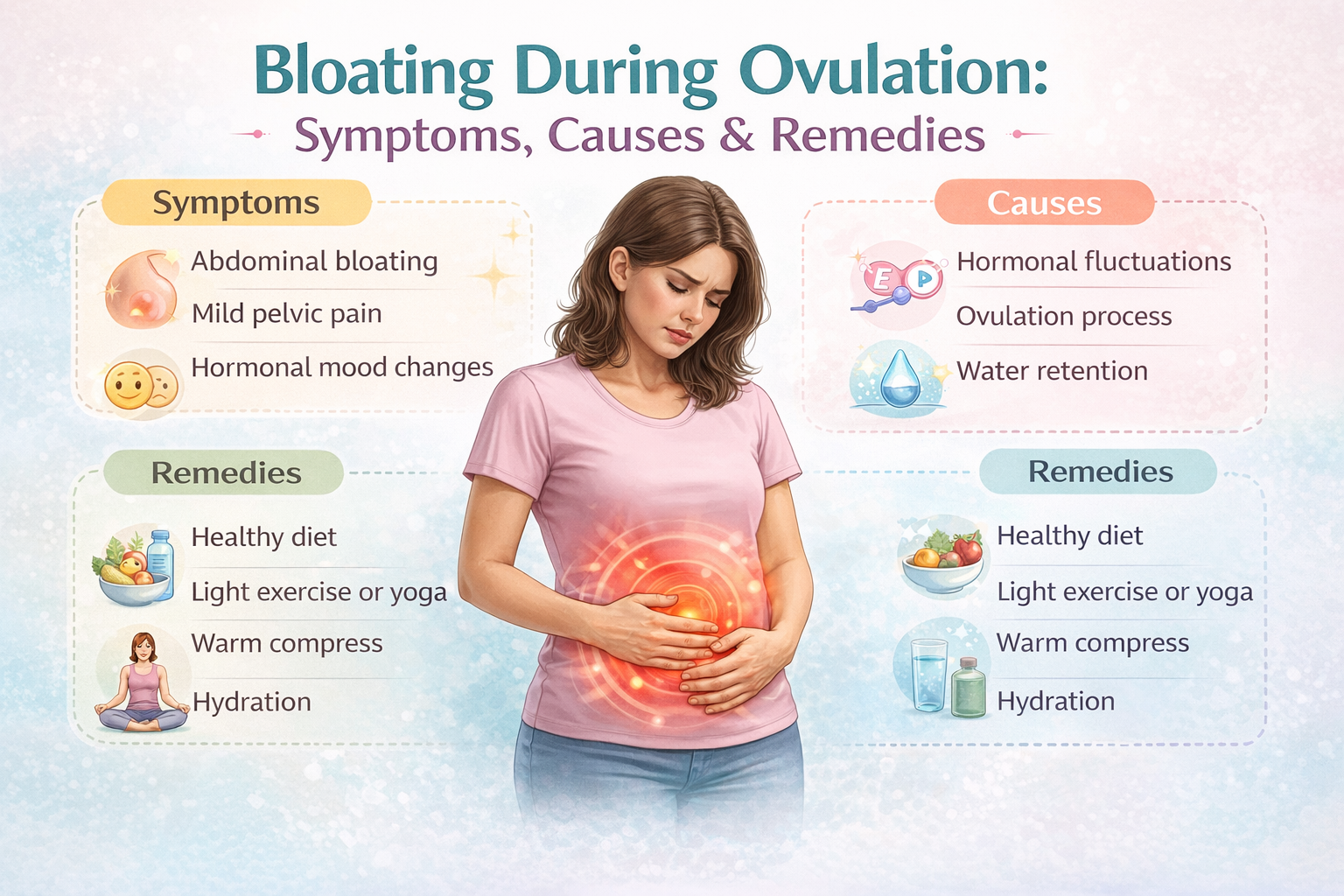
Effective Natural Remedies for Ovulation Bloating in Women
Introduction
Many women experience various physical and hormonal changes during their menstrual cycle. One common yet often overlooked symptom is bloating during ovulation. This condition can cause the abdomen to feel swollen, tight, or uncomfortable for a short period of time.
Ovulation usually occurs around the middle of the menstrual cycle when one of the ovaries releases an egg. During this phase, hormonal fluctuations can affect digestion, fluid balance, and the reproductive organs. These changes may result in ovulation bloating, mild abdominal discomfort, and other symptoms.
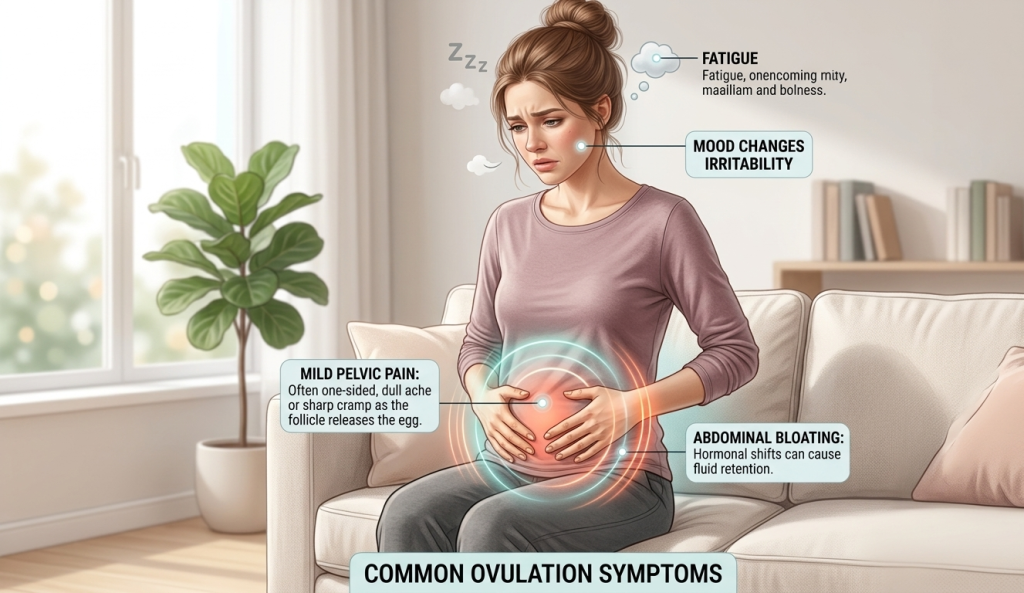
Although ovulation bloating is generally temporary and harmless, it can still cause discomfort and concern for many women. Understanding why bloating happens during ovulation, its symptoms, and effective remedies can help women manage their health more comfortably.
This article explains the causes, symptoms, treatment options, and preventive strategies for ovulation bloating, along with expert guidance on when to consult a gynecologist.
What Is Ovulation?
Ovulation is an important phase of the menstrual cycle in which a mature egg is released from the ovary. This egg travels through the fallopian tube, where it may be fertilized by sperm.
In a typical menstrual cycle of 28 days, ovulation occurs around day 14, although the exact timing can vary among women.
During ovulation, several hormonal changes occur in the body, especially an increase in estrogen and luteinizing hormone (LH). These hormonal shifts prepare the body for potential pregnancy but can also lead to various physical symptoms.
Common ovulation symptoms include:
- Mild abdominal pain
- Increased cervical mucus
- Breast tenderness
- Slight body temperature changes
- Bloating during ovulation
Among these symptoms, bloating is particularly common and is often linked to hormonal and digestive changes.
Why Does Bloating Happen During Ovulation?
Many women wonder why bloating happens during ovulation. The primary reason lies in hormonal fluctuations and changes in the body’s fluid balance.
Hormonal Changes
During ovulation, estrogen levels rise significantly. These hormonal changes can cause the body to retain water, leading to swelling and hormonal bloating in women.
Water Retention
Hormonal shifts may cause the body to hold onto more water than usual. This extra fluid can accumulate in the abdominal area, creating the feeling of fullness or bloating.
Changes in Digestion
Hormones can affect the digestive system as well. Slower digestion may lead to gas formation and stomach bloating during the menstrual cycle.
Increased Blood Flow in the Pelvic Area
During ovulation, blood flow to the reproductive organs increases. This natural process can create a sensation of pressure or heaviness in the lower abdomen.
Common Symptoms of Ovulation: Bloating
Women experiencing bloating during ovulation may notice several symptoms. These symptoms are usually mild and last for a short period.
Abdominal Swelling
The most noticeable symptom is swelling or fullness in the stomach area.
Mild Lower Abdominal Pain
Some women experience slight pain on one side of the lower abdomen. This is known as Mittelschmerz, which means “middle pain.”
Digestive Discomfort
Hormonal changes may cause:
- Gas formation
- Slower digestion
- Feeling full quickly
Breast Tenderness
Increased estrogen levels can make the breasts feel tender or sensitive.
Fatigue
Hormonal changes during ovulation may cause mild fatigue or low energy levels.
Symptoms of Ovulation: Bloating (Table)
| Symptom | Description |
| Abdominal bloating | A feeling of swelling or heaviness in the stomach |
| Mild pelvic pain | Slight discomfort on one side of the lower abdomen |
| Gas and digestive issues | Slower digestion causes gas or discomfort |
| Breast tenderness | Sensitivity due to hormonal changes |
| Fatigue | Feeling tired or low in energy |
| Appetite changes | Increased or decreased hunger |
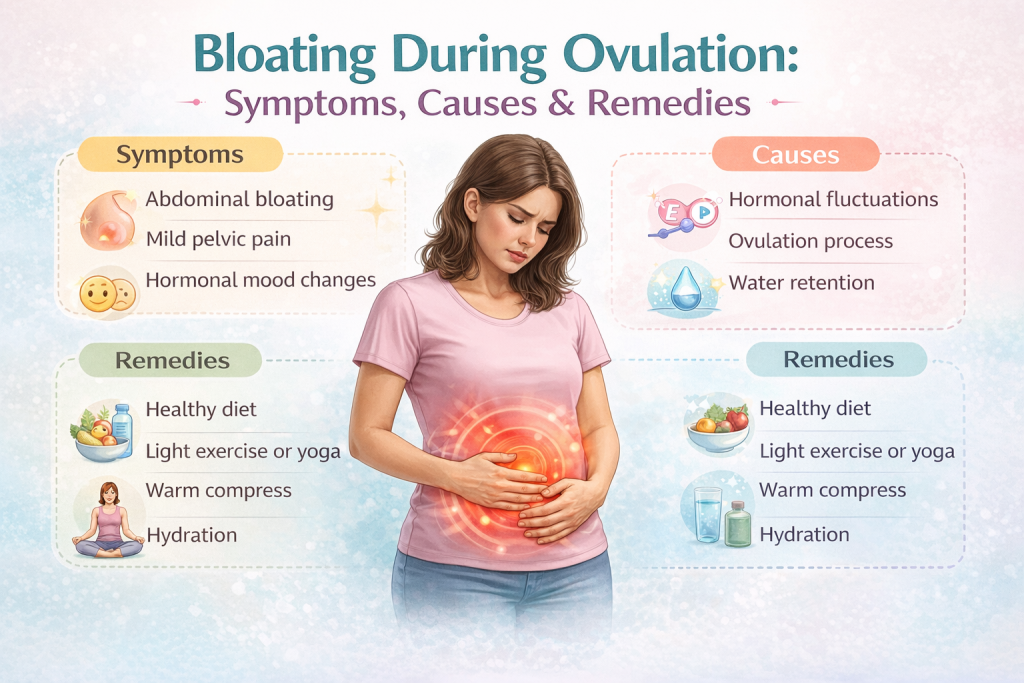
Causes of Bloating During Ovulation
Several factors contribute to ovulation bloating. Understanding these causes can help women manage symptoms more effectively.
Hormonal Fluctuations
Hormones such as estrogen and progesterone affect how the body processes fluids and digestion.
Fluid Retention
Hormonal changes can lead to temporary fluid retention, which may cause swelling in the abdomen.
Digestive Changes
During ovulation, digestion may slow down, increasing the risk of gas and stomach bloating during menstrual cycles.
Ovarian Activity
When the ovary releases an egg, it can create mild inflammation or pressure in the pelvic region.
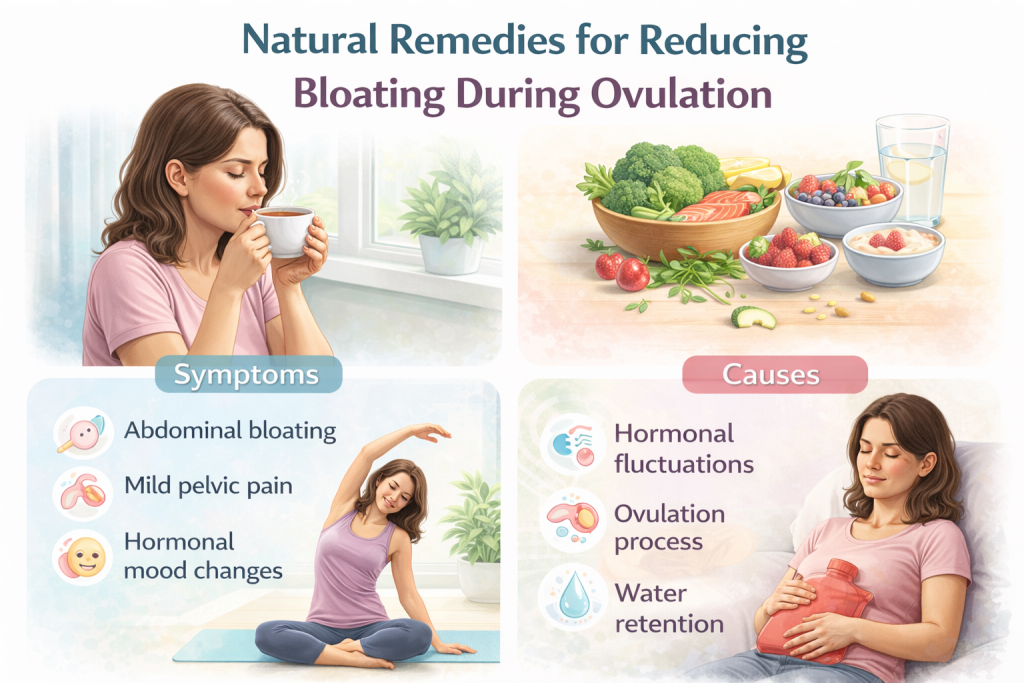
Natural Remedies to Reduce Ovulation Bloating
Fortunately, there are several natural remedies that can help relieve bloating during ovulation.
Stay Hydrated
Drinking enough water helps flush excess sodium and toxins from the body, reducing fluid retention.
Reduce Salt Intake
High sodium levels can worsen water retention. Limiting salty foods can help reduce bloating.
Light Physical Activity
Gentle exercises such as walking, yoga, or stretching can improve digestion and reduce abdominal discomfort.
Herbal Teas
Herbal teas such as ginger, peppermint, and chamomile may help relieve gas and bloating.
Eat Smaller Meals
Eating smaller, balanced meals throughout the day may reduce pressure on the digestive system.
Foods That Help Reduce Ovulation Bloating (Table)
| Food | Benefits |
| Bananas | Rich in potassium, it helps balance fluid levels |
| Yogurt | Improves digestion with probiotics |
| Ginger | Reduces gas and inflammation |
| Cucumber | Hydrates the body and reduces swelling |
| Leafy greens | High fiber improves digestion |
Foods to Avoid During Ovulation
Certain foods may worsen hormonal bloating in women.
These include:
- Carbonated drinks
- Highly processed foods
- Excess sugar
- Fried foods
- Foods high in sodium
Reducing these foods during ovulation can help minimize symptoms.
Lifestyle Tips to Manage Hormonal Bloating
Healthy lifestyle habits can significantly reduce ovulation bloating.
Exercise Regularly
Regular exercise improves blood circulation and supports hormonal balance.
Reduce Stress
Stress can worsen digestive issues and hormonal imbalances. Activities like meditation and deep breathing can help.
Get Enough Sleep
Quality sleep helps regulate hormones and supports overall health.
Maintain a Balanced Diet
Eating a diet rich in vitamins, minerals, and fiber can improve digestion and reduce bloating.
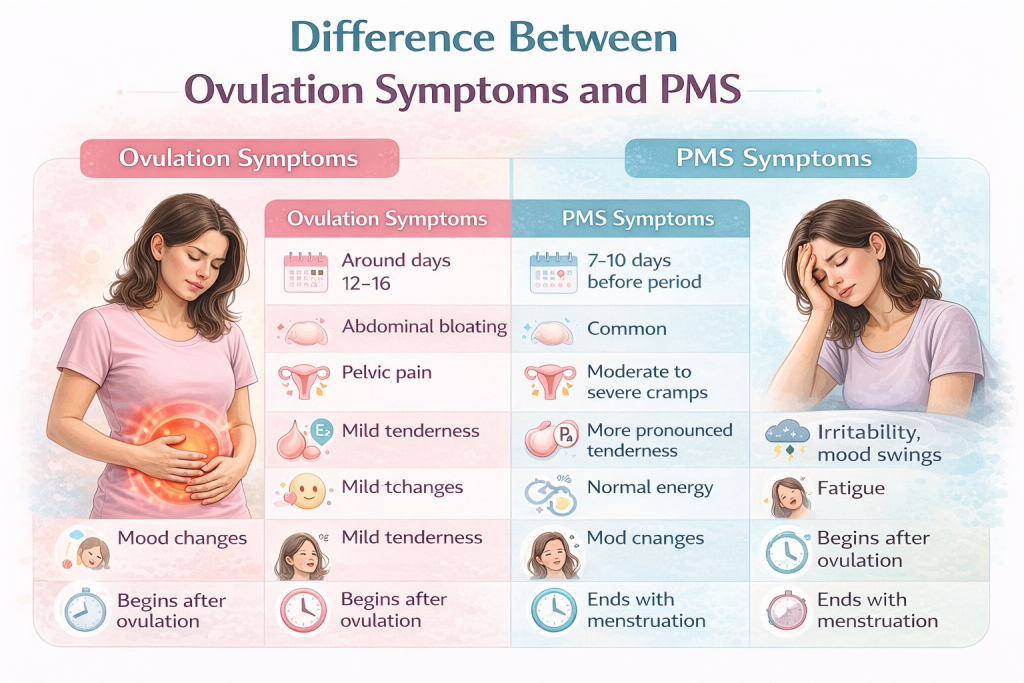
Difference Between Ovulation Symptoms and PMS (Table)
| Feature | Ovulation | PMS |
| Timing | Middle of menstrual cycle | Before menstruation |
| Main hormone | Estrogen | Progesterone |
| Duration | 1–2 days | 3–5 days |
| Common symptoms | Mild pain, bloating | Mood swings, cramps |
When to Consult a Gynecologist
In most cases, bloating during ovulation is normal and temporary. However, persistent or severe symptoms should not be ignored.
Women should consult a doctor if they experience:
- Severe abdominal pain
- Persistent bloating lasting several days
- Irregular menstrual cycles
- Nausea or vomiting
- Severe pelvic pain
A qualified gynecologist in Khandwa can evaluate symptoms and provide appropriate treatment if necessary.
Conclusion
Bloating during ovulation is a common experience for many women and is usually caused by natural hormonal changes in the menstrual cycle. Fluid retention, digestive changes, and increased blood flow to the reproductive organs can all contribute to this condition.
Fortunately, simple lifestyle changes such as maintaining a healthy diet, staying hydrated, exercising regularly, and managing stress can help reduce ovulation bloating.
However, if symptoms become severe or persistent, seeking professional medical advice is important to rule out underlying health concerns.
Consult Dr. Bhawana Atriwal at Atriwal Hospital, Khandwa
If you are experiencing bloating during ovulation, menstrual discomfort, or other women’s health issues, professional guidance can help you manage symptoms effectively.
Dr. Bhawana Atriwal, an experienced Gynecologist at Atriwal Hospital in Khandwa, provides expert care and advanced treatment for various women’s health conditions.