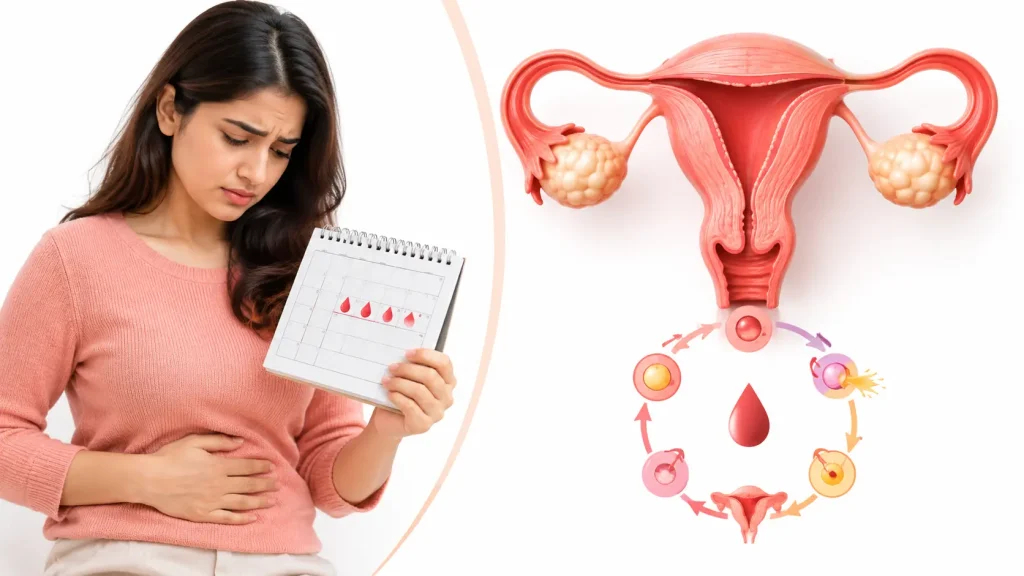
Period irregularities can result from a number of conditions that impact the menstrual cycle. Hormonal fluctuations, illnesses, stress, and lifestyle choices are a few examples. Women can identify uncommon symptoms and seek prompt medical attention by being aware of the potential reasons.
1. PCOS, or polycystic ovarian syndrome
Menstrual periods and ovulation can be impacted by the common hormonal disease known as polycystic ovarian syndrome (PCOS). Period irregularities, missing periods, acne, excessive facial hair, and unexplained weight fluctuations are all possible symptoms for women with PCOS. Because hormonal imbalances can stop the ovaries from releasing eggs regularly, PCOS and irregular periods are frequently associated. Early detection of PCOS symptoms and getting medical attention can help control the illness and promote improved reproductive health
2. Thyroid Issues
The thyroid gland is crucial for controlling hormone production and the body’s metabolism. Menstrual regularity can be impacted by both an overactive thyroid (hyperthyroidism) and an underactive thyroid (hypothyroidism). Women with thyroid issues may experience irregular menstrual cycles, skipped periods, or abnormally frequent periods. Fatigue, inexplicable weight fluctuations, and mood swings are possible additional symptoms. Thyroid and irregular periods can be managed with the right diagnosis and medication.
3. Mental health and stress
The hormones that control ovulation and menstruation might be impacted by ongoing stress. The regular menstrual cycle may be disrupted by stressful daily routines, worry, emotional strain, and insufficient sleep. Some women may consequently have missed or delayed periods. Because chronic stress can affect hormonal balance, there is a connection between stress and irregular periods. Menstrual health can be supported by stress management, good sleep practices, and consulting a doctor if irregularities persist.
4. Unexpected Weight Loss or Gain
The hormones that control menstruation can be impacted by significant changes in body weight. Rapid weight reduction might impair the body’s capacity to sustain regular reproductive processes, while sudden weight gain may contribute to hormonal imbalance. Ovulation may also be impacted by restrictive diets and poor nutrition. Particularly when menstrual alterations persist over multiple cycles, weight gain and irregular periods or weight loss and period issues should not be disregarded.
5. Excessive Exercise and Modifications to Lifestyle
Frequent exercise promotes general health, but too much exertion without adequate rest and nourishment might throw off menstrual cycles. Hormone production can be impacted by intense exercise, low calorie intake, poor eating habits, and insufficient sleep. These elements could cause periods to be missed or postponed. Menstrual health and lifestyle can be supported by eating wholesome meals, keeping balanced routines, and giving yourself enough time to recuperate.
6. Breastfeeding and Pregnancy
In women who have regular menstrual cycles, missing a period can occasionally be an early indication of pregnancy. Menstruation naturally stops during pregnancy due to hormonal changes. Due to changes in reproductive hormones following childbirth, nursing may also postpone the onset of menstruation. If you have delayed or skipped periods, think about getting a pregnancy test when the time is right and seeing a doctor to learn about the changes in your menstrual cycle and pregnancy.
7. Hormonal Changes and the Perimenopause
The time before menopause when reproductive hormone levels start to change is known as perimenopause. Women may have hot flashes, irregular periods, altered menstrual flow, and trouble sleeping during this phase. Menstrual regularity can also be impacted by some drugs and reproductive health issues. A gynecologist should assess any persistent or atypical changes in order to determine the reason and discuss appropriate treatment options.
When Should You Consult a Gynaecologist for Irregular Periods?
Occasional changes in menstrual cycles can happen, but repeated irregularities should not be ignored. You should consult a gynaecologist in Khandwa if your periods repeatedly occur less than 21 days or more than 35 days apart, or if you miss periods for three months without a known reason. Other warning signs include very heavy bleeding, periods lasting longer than seven days, severe menstrual cramps, pelvic pain, or bleeding between periods or after sexual intercourse. Irregular periods accompanied by sudden weight changes or excessive facial hair also require medical attention. Timely consultation can help identify the cause and determine the right irregular period treatment for better women’s healthcare.
How Are Irregular Periods Diagnosed?
A gynecologist may examine your menstrual history, symptoms, lifestyle, and medical history in order to determine the cause of irregular periods. Depending on your health, the doctor can suggest a pelvic ultrasound to look at the uterus and ovaries, a pregnancy test if necessary, or blood tests to evaluate thyroid and hormone levels. These studies aid in the detection of potential hormonal imbalances and other disorders related to reproductive health. A timely appointment with a gynecologist can help identify the underlying reason of irregular periods and develop an appropriate treatment plan.
Treatment Options for Irregular Periods
The underlying reason, age, symptoms, and reproductive health objectives all influence the appropriate treatment for irregular periods. When clinically appropriate, a gynecologist may suggest hormone therapy, medicine for thyroid or hormonal disorders, or medical management for PCOS. Menstrual regularity may also be enhanced by dietary and lifestyle modifications. Hormonal imbalance treatment differs from woman to woman and necessitates appropriate medical assessment. A doctor should be consulted before taking period-regulating medications or self-medicating because the incorrect course of action could have negative effects on your health.
Tips to Support Healthy Menstrual Cycles
Maintaining healthy daily habits can support a healthy menstrual cycle and overall well-being. Eat a balanced, nutritious diet, follow a regular sleep schedule, and include moderate physical activity in your routine. Manage stress through relaxation activities and maintain a healthy weight. Tracking your menstrual dates, bleeding duration, and symptoms can help identify unusual changes. Following these menstrual health tips and scheduling regular gynaecological checkups can support better women’s healthcare.
Gynaecological Care at Miraculous Atriwal Hospital, Khandwa