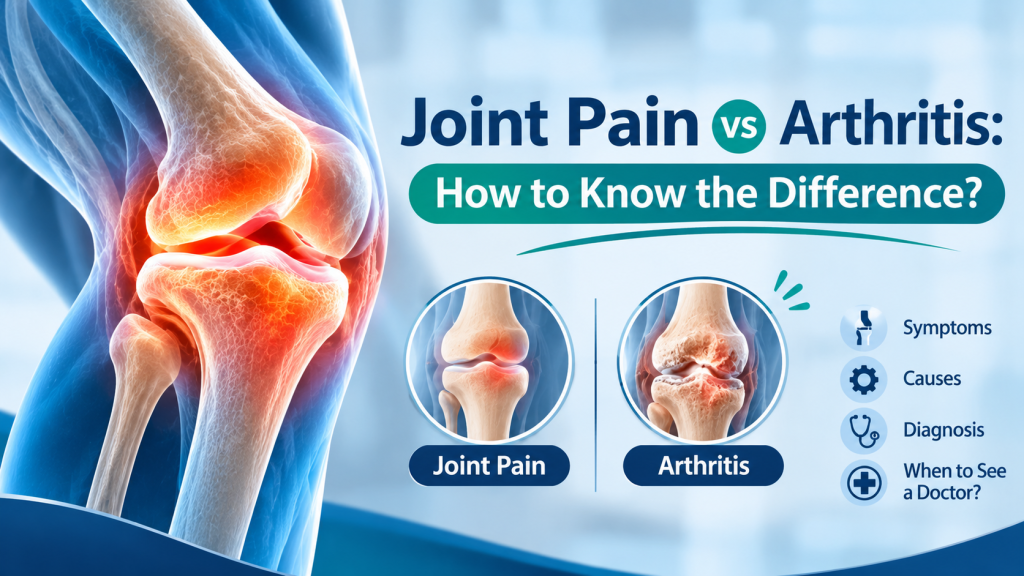
Joint pain is a common problem, especially as we age or take part in repetitive physical activities. However, not every instance of joint pain is caused by arthritis. Injuries, overuse, inflammation, and other health conditions can also lead to joint discomfort.
Understanding the difference between joint pain and arthritis can help you recognise possible warning signs and seek the right medical care at the right time.
What Is Joint Pain?
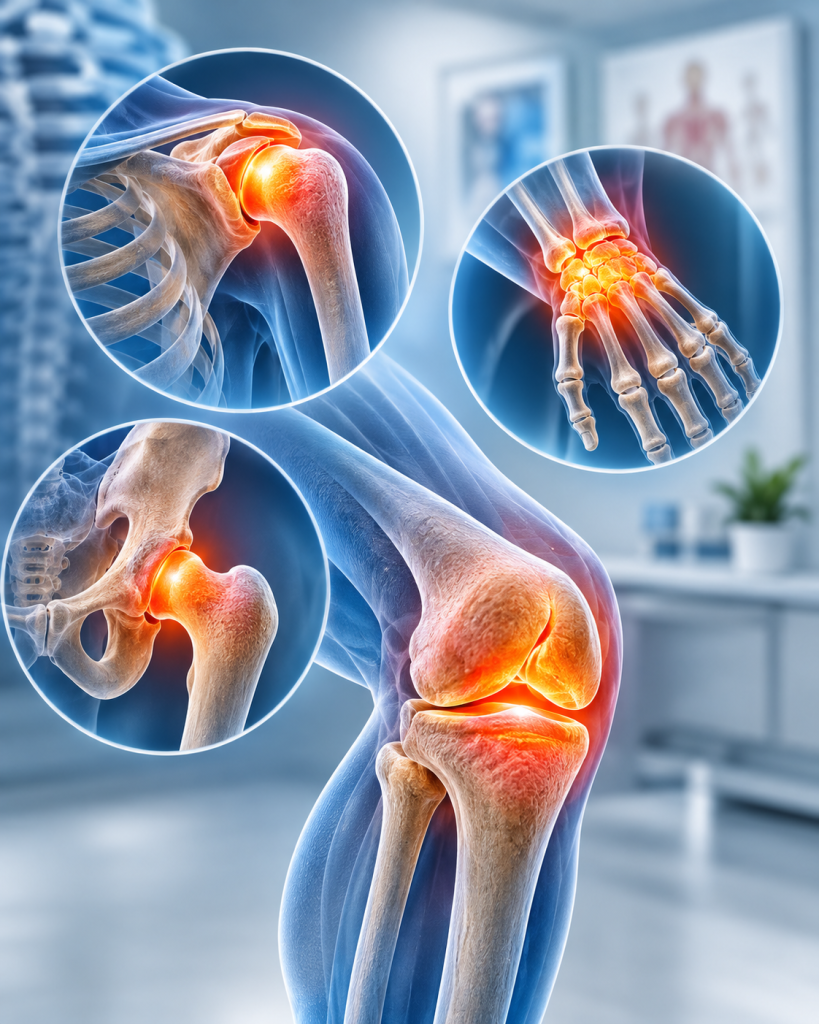
Joint pain refers to discomfort, soreness, or stiffness in one or more joints of the body. It can affect the knees, hips, shoulders, elbows, wrists, and other joints.
Some common causes of joint pain include:
Injuries: Sprains, strains, fractures, and other joint injuries can cause pain and swelling.
Overuse: Repetitive movements or excessive physical activity can put pressure on joints.
Inflammation: Conditions such as bursitis and tendinitis can cause pain around the joints.
Infections: Certain infections can affect the joints and cause pain or swelling.
Lifestyle factors: Poor posture, inactivity, and excess body weight may contribute to joint discomfort.
Joint pain can be short-term or long-lasting. It may improve with rest and appropriate treatment, depending on its underlying cause. Persistent joint pain, however, should not be ignored.
What Is Arthritis?
Arthritis is a medical disorder that causes inflammation of the joints. It is a chronic condition that usually worsens with time. There are over a hundred varieties of arthritis; however, the most frequent ones are:
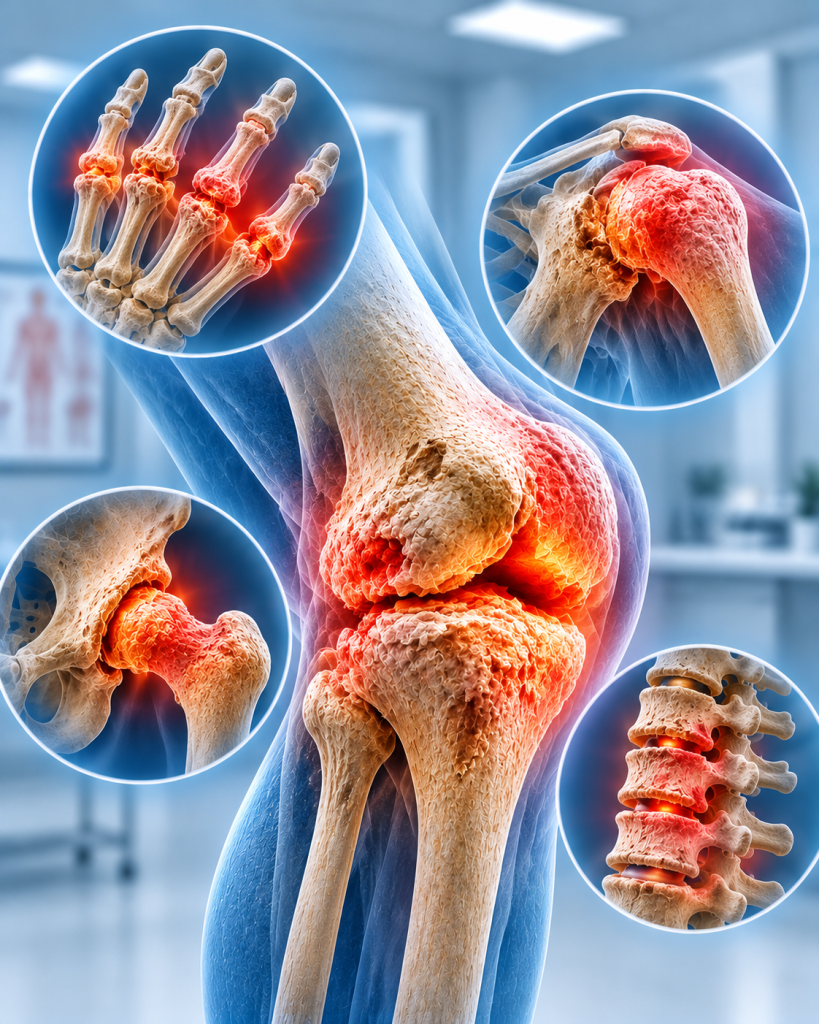
Osteoarthritis (OA) is a wear-and-tear condition in which the cartilage in joints deteriorates, causing pain and stiffness. This can cause pain, stiffness, and reduced movement. It commonly affects the knees, hips, hands, and spine, particularly with increasing age.
Rheumatoid arthritis (RA) is an autoimmune illness in which the immune system assaults the joint lining, resulting in inflammation and joint destruction. It causes inflammation, pain, and swelling and may lead to joint damage if not treated appropriately. It often affects joints on both sides of the body.
Fibromyalgia is a chronic illness defined by widespread musculoskeletal pain, tiredness, and soreness in specific locations. Fibromyalgia is sometimes confused with arthritis because it causes widespread musculoskeletal pain and tenderness. However, it is not a type of arthritis because it does not primarily cause joint inflammation or joint damage.
Gout is a type of inflammatory arthritis caused by the formation of uric acid crystals in and around the joints. It commonly affects the big toe and can cause sudden episodes of severe pain, redness, and swelling.
Arthritis vs. Joint Pain: Key Differences
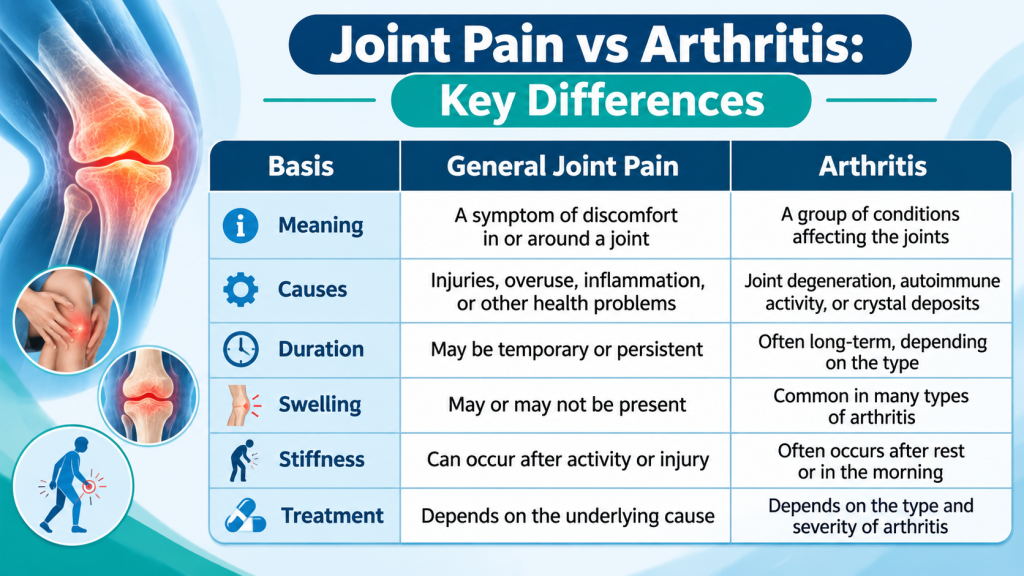
Joint pain and arthritis are closely related, but they are not the same. Joint pain is a symptom, whereas arthritis refers to a group of medical conditions that affect the joints. Understanding the difference between arthritis and joint pain can help you recognise when medical attention may be needed.
Joint discomfort and arthritis are closely related, although they are not synonymous. Joint pain is a symptom of a larger issue, whereas arthritis is a collection of medical disorders that affect the joints. Injury, muscle strain, overuse, or other health issues can all cause joint discomfort, which may be brief or intermittent. Arthritis, on the other hand, can occur as a result of joint deterioration or autoimmune activity and is frequently treated long-term.
Another significant distinction is that joint pain can occur without swelling or inflammation, but arthritis frequently causes joint edema, stiffness, tenderness, and inflammation. Joint pain is treated based on its underlying cause, whereas arthritis treatment is determined by its type and severity. It is critical to recognize that while arthritis can cause joint pain, not all joint pain is caused by arthritis. If joint pain persists or impairs daily activities, see a doctor for a proper diagnosis and treatment.
It is important to remember that arthritis can cause joint pain, but not every instance of joint pain is arthritis. If joint discomfort persists or affects daily activities, consult a doctor to identify the underlying cause.
Common Symptoms: When Should You Get Concerned?
Recognizing the early signs of arthritis allows you to get medical assistance at the appropriate time. Common arthritis symptoms include persistent or recurring joint pain, stiffness (particularly in the morning), edema, soreness, and warmth around the affected joints. Some persons may also have trouble bending or straightening their joints, as well as limited movement or walking ability. Persistent joint pain that interferes with normal tasks, such as climbing stairs or getting out of bed, should not be overlooked.
Pay attention to any odd changes in your joints. Sudden severe joint pain, swollen joints with fever, redness or warmth, or inability to put weight on the affected joint necessitates immediate medical attention.
How Are Arthritis and Joint Pain Diagnosed?
To determine the cause of joint pain, an orthopedic doctor examines the patient’s medical history, including how long the pain has been present, previous injuries, and other symptoms. A physical examination is then undertaken to determine edema, pain, stiffness, and difficulty moving the afflicted joint. Depending on the symptoms, doctors may suggest X-rays to detect changes in the bones and joints. Blood tests may be necessary if inflammatory or autoimmune arthritis is suspected. In some circumstances, further imaging procedures, such as ultrasound or MRI, are used to better investigate the affected area. Proper arthritis and joint pain diagnosis is based on the patient’s symptoms, physical examination, and suitable investigations, rather than pain alone.
When Should You See An Orthopedic Doctor?
If joint pain persists for several days, returns frequently, or is accompanied by swelling and stiffness that impairs movement, you should see an orthopedic doctor. Difficulties walking, climbing stairs, completing daily tasks, or sleeping comfortably owing to joint discomfort are all indications that medical treatment is required. If the pain does not improve with basic treatment, see a joint pain specialist to determine the root cause. Sudden severe joint pain accompanied by swelling, redness, warmth, or fever necessitates immediate medical attention. Visiting a reputable orthopedic hospital in Khandwa will help you get a prompt evaluation and proper treatment.
Joint pain is a symptom that can be caused by a variety of factors, whereas arthritis is a collection of joint-related disorders. Not every case of joint pain suggests arthritis, but chronic suffering should never be overlooked. Early detection and therapy can help manage symptoms and keep joints healthy.