
That experience has fundamentally changed.
Laparoscopic surgery often called keyhole surgery has transformed what surgery feels like for patients. Smaller incisions. Faster recovery. Less pain. Quicker return to normal life. And results that are equally effective sometimes superior to traditional open surgery.
At Miraculous Atriwal Hospital, Khandwa, laparoscopic surgery is available right here without the need to travel to Indore or Bhopal. And for the families of Khandwa who have historically assumed that minimally invasive surgery required a distant city hospital, that availability represents a genuine change in what local healthcare can offer.
This blog explains laparoscopic surgery clearly what it is, how it works, what its real benefits are, and who it’s suitable for so you can approach any surgical conversation with your doctor fully informed and without unnecessary fear.
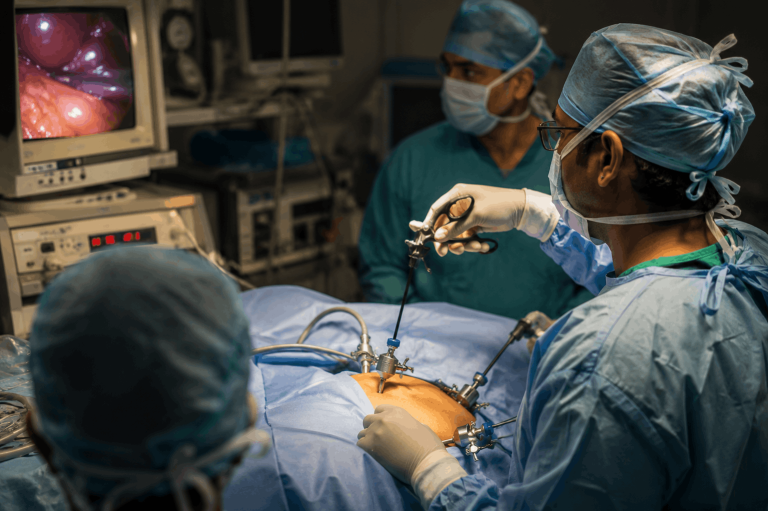
Laparoscopic surgery is a minimally invasive surgical technique in which procedures are performed through several very small incisions typically 0.5 to 1.5 centimetres rather than the large incision required in traditional open surgery.
Through one of these small incisions, the surgeon inserts a laparoscope a thin, flexible tube with a high-definition camera and a light source at its tip. The camera transmits a clear, magnified view of the internal surgical field onto a monitor in the operating theatre, allowing the surgeon to see with remarkable precision and detail.
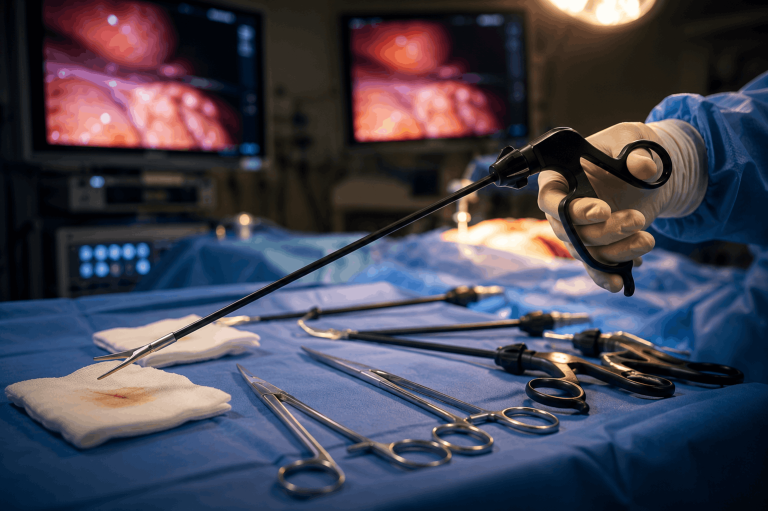
Through the remaining small incisions, specialized surgical instruments are inserted to perform the actual procedure cutting, removing, repairing, or reconstructing the affected tissue or organ.
The result is a surgical procedure that achieves the same or often better clinical outcome as open surgery, while causing dramatically less trauma to the surrounding tissues, muscles, and skin.
The contrast with traditional open surgery is significant. Where open surgery requires a large incision to give the surgeon direct visual and physical access to the surgical field, laparoscopic surgery achieves the same access through camera technology and specialized instruments without the extensive tissue disruption that a large incision necessarily involves.
Understanding what happens during laparoscopic surgery reduces the anxiety that many patients feel when it is recommended. Here is a simple, honest overview of the process:
Pre-operative preparation for laparoscopic surgery is similar to that for any surgical procedure blood tests, imaging, an anaesthetic assessment, and a pre-operative consultation where the surgeon explains exactly what the procedure will involve and answers any questions.
Laparoscopic surgery is almost always performed under general anaesthesia meaning you will be completely asleep and comfortable throughout the procedure.
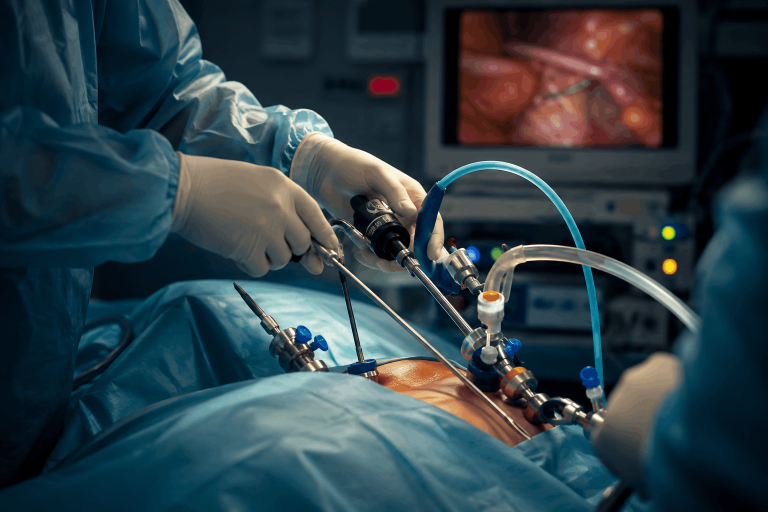
Once anaesthesia is established, small incisions are made in the abdominal wall at carefully chosen positions. Carbon dioxide gas is gently introduced through one of these incisions to inflate the abdominal cavity creating space between the abdominal wall and the internal organs that gives the surgeon room to work and see clearly.
The laparoscope is inserted through one incision, and the surgical instruments through others. Watching the high-definition monitor, the surgeon performs the procedure with precision guided by the magnified camera image that often provides better visualisation of the surgical field than open surgery can offer.
Once the procedure is complete, the instruments are removed, the gas is released, and the small incisions are closed typically with a stitch or two each, or sometimes just a small dressing.
Recovery begins almost immediately after laparoscopic surgery and this is where the benefits become most tangible for patients. Most laparoscopic surgery patients are awake, alert, and sitting up within hours of the procedure. Many are eating and drinking comfortably the same day. And many are discharged from hospital significantly sooner than they would be after the equivalent open surgery.
The benefits of laparoscopic surgery are real, evidence-based, and consistently meaningful for patients across different procedures and conditions. Here is an honest, detailed look at what laparoscopic surgery actually offers:
This is the benefit that matters most to the majority of patients and it is the most dramatic difference between laparoscopic and open surgery.
Because laparoscopic surgery involves only small incisions rather than a large opening, the trauma to the abdominal wall muscles and surrounding tissues is minimal. Less tissue trauma means less healing required and less healing required means faster recovery.
What this looks like practically:
– Hospital stay after laparoscopic surgery is typically 1–3 days, compared to 5–7 days or more after equivalent open surgery
– Return to light daily activities moving around the house, basic self-care within days rather than weeks
– Return to desk work or light professional activity typically within 1–2 weeks after laparoscopic surgery, compared to 4–6 weeks after open surgery
– Return to full physical activity typically within 3–4 weeks after laparoscopic surgery
For working professionals, parents of young children, and anyone whose daily life cannot accommodate an extended recovery period this faster recovery timeline is genuinely transformative.
Pain after surgery comes primarily from two sources: the surgical procedure itself and the trauma to the tissue caused by the incision and retraction required to access the surgical field.
In open surgery, a large incision through the abdominal wall muscles creates significant post-operative pain that requires strong pain medication sometimes for days to weeks.
In laparoscopic surgery, the small incisions cause minimal muscle trauma, resulting in significantly less post-operative pain. Most laparoscopic surgery patients describe their pain after surgery as manageable controlled effectively with standard oral pain medication rather than the stronger medication often required after open surgery.
Less pain means less medication. Less medication means clearer thinking, better appetite, and more active participation in early recovery. It also means less risk of the constipation, nausea, and other side effects associated with stronger pain medications.
The cosmetic difference between laparoscopic surgery and open surgery scars is significant and for many patients, particularly younger patients and women, it is a meaningful benefit.
Open surgery creates a scar that may be 10–20 centimetres or longer, depending on the procedure. This scar is permanent and while it fades with time, it remains visible.
Laparoscopic surgery creates 2–4 small incision sites, each typically less than 1.5 centimetres. These heal quickly and fade to small, barely noticeable marks that most patients find completely acceptable.
For procedures involving the abdomen gallbladder removal, gynaecological surgery, hernia repair this cosmetic advantage of laparoscopic surgery is consistently appreciated by patients.
Surgical site infection is one of the most common and most costly complications of surgery adding days to hospital stays, requiring antibiotic treatment, and in some cases leading to wound breakdown that significantly delays recovery.
The relationship between incision size and infection risk is direct: larger incisions expose more tissue to potential contamination and require more complex wound management. Small laparoscopic incisions have a substantially lower infection risk than large open surgery wounds a benefit that is particularly significant for patients with diabetes or other conditions that impair wound healing.
Laparoscopic surgery consistently results in less intraoperative blood loss than the equivalent open surgical procedure. This is because the careful, precise approach enabled by magnified camera visualisation allows surgeons to manage bleeding vessels more accurately.
Less blood loss means less risk of requiring blood transfusion and faster return of the patient’s blood parameters to normal levels after surgery.
After open abdominal surgery, the bowel frequently goes into a period of reduced activity called post-operative ileus that delays the patient’s ability to eat and drink normally. This is partly a response to bowel handling during surgery.
Because laparoscopic surgery involves minimal handling of the bowel, post-operative ileus is less frequent and less prolonged. Most laparoscopic surgery patients are drinking fluids within hours of their procedure and eating normally within a day supporting faster recovery and earlier discharge.
This benefit is less discussed in patient-facing information but it is clinically important. The magnified, high-definition camera image provided by the laparoscope often gives the surgeon a better, more detailed view of the surgical field than the direct vision available in open surgery.
This superior visualisation supports more precise surgical technique particularly in complex procedures where proximity to delicate structures requires careful, accurate work. Better visualisation contributes directly to better surgical outcomes.
Laparoscopic surgery has expanded significantly over the past decade and a substantial range of procedures that previously required open surgery can now be performed minimally invasively.
At Miraculous Atriwal Hospital, Khandwa, laparoscopic surgery is available for:
Laparoscopic cholecystectomy is the most commonly performed laparoscopic procedure worldwide and the gold standard treatment for gallstones causing symptoms. The gallbladder is removed through small incisions, typically allowing patients to go home within 24 hours and return to normal activities within a week.
For Khandwa patients suffering from gallstone pain, bloating, and biliary colic laparoscopic cholecystectomy at Miraculous Atriwal Hospital offers definitive treatment without the need to travel to Indore.
A range of gynaecological conditions including ovarian cysts, fibroids, endometriosis, ectopic pregnancy, and certain diagnostic procedures can be managed laparoscopically by our experienced gynaecological team.
Laparoscopic gynaecological surgery is particularly valuable for women offering effective treatment of gynaecological conditions with minimal disruption to daily life, faster return to normal activities, and cosmetically acceptable results.
Hernia repair particularly inguinal (groin) and umbilical hernias is increasingly performed laparoscopically, offering faster recovery and lower recurrence rates in appropriate cases compared to traditional open hernia repair.
Removal of the inflamed appendix in appendicitis is now routinely performed laparoscopically in appropriate cases offering faster recovery, lower infection rates, and earlier discharge compared to open appendectomy.
When the cause of abdominal or pelvic symptoms remains unclear after other investigations, diagnostic laparoscopy allows direct visualisation of the abdominal and pelvic organs enabling accurate diagnosis with minimal invasiveness.
Laparoscopic surgery is not automatically the right approach for every patient or every procedure. The decision between laparoscopic and open surgery depends on multiple factors and should always be made through honest, individual discussion with an experienced surgeon.
Laparoscopic surgery is generally well-suited to patients who:
– Are medically fit for general anaesthesia
– Have conditions amenable to laparoscopic approach gallstones, ovarian cysts, hernia, appendicitis
– Want to minimize recovery time and return to normal activity quickly
– Value cosmetic outcomes alongside clinical ones
Situations where open surgery may be preferred include:
– Very complex procedures where laparoscopic approach carries higher risk
– Cases where significant abdominal adhesions from previous surgery complicate the laparoscopic approach
– Emergency situations where rapid surgical access is the overriding priority
– Patient-specific factors that increase laparoscopic risk
At Miraculous Atriwal Hospital, Khandwa, our surgical team will always give you an honest assessment of whether laparoscopic surgery is appropriate for your specific situation and a clear explanation of the reasoning behind that recommendation. The decision is always made with your safety and your best outcome as the only priorities.
For many years, Khandwa patients requiring laparoscopic surgery faced a difficult choice travel to Indore or Bhopal for the procedure, or undergo open surgery locally.
That choice no longer exists in the way it once did.
At Miraculous Atriwal Hospital, Khandwa, laparoscopic surgery is performed by our experienced surgical team in a fully equipped operating theatre with qualified anaesthetic support and the post-operative care infrastructure that laparoscopic surgery patients need.
Choosing laparoscopic surgery at Miraculous Atriwal Hospital, Khandwa means:
– Expert surgical care without the physical, emotional, and financial burden of traveling to a distant city
– Family close by during your procedure and recovery not hours away in Khandwa while you’re in Indore
– Continuity of care the same team managing your pre-operative assessment, surgery, and post-operative follow-up
– The confidence of knowing that quality minimally invasive surgery is available in your own city
If you’ve been advised that you may need surgery or if you have a condition that you believe might be treatable surgically the first step is a surgical consultation.
At Miraculous Atriwal Hospital, Khandwa, your consultation will include:
A thorough discussion of your symptoms, medical history, and relevant investigations. A clear explanation of whether your condition is amenable to laparoscopic surgery and why. An honest discussion of the risks and benefits specific to your situation. A complete overview of what the procedure will involve, what to expect during recovery, and how to prepare. Full opportunity to ask every question you have until you feel genuinely informed and confident about your decision.
You should never agree to surgery without feeling fully informed. Our team is committed to ensuring that every patient at Miraculous Atriwal Hospital reaches their surgical decision with complete understanding and genuine confidence.
To make the most of the faster recovery that laparoscopic surgery offers here are practical evidence-based tips for the post-operative period:
Move early and gently. Short walks even just around the room from the first day after laparoscopic surgery promote circulation, reduce the risk of blood clots, and support bowel recovery. Movement is medicine in the early post-operative period.
Eat light initially. Your digestive system needs a gentle reintroduction to food. Start with easily digestible foods soups, khichdi, soft fruits and gradually return to your normal diet as your appetite and tolerance allow.
Manage shoulder tip pain. Some laparoscopic surgery patients experience shoulder or upper chest discomfort from the residual carbon dioxide gas used during surgery. This is temporary and resolves within 24–48 hours. Gentle movement and walking help it resolve faster.
Rest when your body asks. Faster recovery doesn’t mean pushing through fatigue. Rest when you’re tired your body is healing, and healing requires energy.
Follow your surgeon’s specific guidance. Every procedure and every patient is different. The recovery guidance from your surgeon at Miraculous Atriwal Hospital is tailored to your specific situation follow it carefully.
Attend your follow-up appointments. Post-operative follow-up is not optional. It confirms your recovery is progressing well, allows early identification of any concerns, and provides the opportunity to get answers to questions that arise during recovery.
Surgery of any kind can feel frightening. The decision to proceed is never taken lightly by patients or by surgeons. We understand this, and we approach every surgical consultation with the respect and seriousness that decision deserves.
Laparoscopic surgery has made surgery genuinely less daunting smaller, faster, gentler, and more manageable than the surgery most people imagined when they first heard they might need it. At Miraculous Atriwal Hospital, Khandwa, our commitment is to provide this modern, minimally invasive surgical care with the expertise, safety, and genuine compassion that every patient deserves.
If you’ve been told you need surgery or if you have a condition you suspect might need surgical management come and talk to us first. Ask your questions. Understand your options. Make your decision with complete information and genuine confidence.
Because surgery, done right, is not something to fear. It is something that gives you your life back. 💙
📸 Follow us for health education: https://www.instagram.com/miraculousatriwalhospital/
▶️ Watch detailed videos: https://www.youtube.com/@AtriwalHospital
Because informed patients make better decisions. And better decisions lead to better outcomes.
Considering laparoscopic surgery in Khandwa? Visit Miraculous Atriwal Hospital for an expert surgical consultation experienced surgeons, modern minimally invasive techniques, and the genuine care that helps you recover faster and return to the life you love.
Atriwal Hospital — a trusted multispeciality centre delivering advanced treatment, compassionate care, and modern healthcare for every family.
Plot No.3 Badgaon Bhila Road, in-front of Hinduja Farm House, Khandwa M.P. 450001
2026 Miraculous Atriwal Hospital. All Rights Reserved | Designed by Immerze Creations